Carregando...
Iniciante10 min
Crie um bug / marca-d'água.
Um bug (selo de canto) é um elemento pequeno com a marca — indicador AO VIVO, logo do canal, selo de evento — que fica num canto da tela. Ele surge com uma animação de escala e some suavemente.
Bug — template OGraf
1920 x 1080
O que muda em relação a um lower third?
Posição
Canto superior direito. position: absolute; top: 40px; right: 40px — nunca fixed, que escaparia para a viewport em vez de ficar na área de render de 1920×1080.
Animação
Escala a partir de 50% + blur em vez de deslizar. Um efeito de "materialização" — menos invasivo que um deslize para algo que fica na tela.
Ponto AO VIVO pulsante
Um pulso com @keyframes em CSS, num elemento irmão com posição absoluta, cria o sinal AO VIVO no estilo de broadcast sem nenhum JavaScript.
O manifesto
bug.ograf.jsonJSON
{
  "$schema": "https://ograf.ebu.io/v1/specification/json-schemas/graphics/schema.json",
  "id": "dev.ograf.tutorial.bug",
  "version": "1.0.0",
  "name": "Corner Bug / LIVE",
  "description": "Corner indicator that pops in with a scale animation and a pulsing LIVE dot. Tutorial from ograf.dev.",
  "author": {
    "name": "ograf.dev",
    "url": "https://ograf.dev"
  },
  "main": "graphic.mjs",
  "stepCount": 1,
  "supportsRealTime": true,
  "supportsNonRealTime": false,
  "thumbnails": [
    {
      "file": "thumbnail.webp",
      "resolution": {
        "width": 1920,
        "height": 1080
      }
    }
  ],
  "schema": {
    "type": "object",
    "properties": {
      "label": {
        "type": "string",
        "title": "Label",
        "gddType": "single-line",
        "default": "LIVE"
      },
      "sublabel": {
        "type": "string",
        "title": "Sublabel",
        "gddType": "single-line",
        "default": "Breaking News"
      }
    }
  }
}
Baixe o pacote completo: Bug de canto
Um pacote OGraf Graphics Definition v1 de verdade. Um renderizador compatível lê o manifesto e conduz o ciclo de vida. Licença MIT; coloque em qualquer sistema compatível com OGraf.
bug.ograf.json
Manifesto — o que o renderizador lê (id, schema, flags de ciclo de vida)
graphic.mjs
Web Component com load / play / update / stop / customAction / dispose
style.css
Folha de estilo, carregada pelo graphic.mjs com uma tag <link>
thumbnail.webp
Prévia em 1920×1080, declarada no manifesto
README.md
Instruções de uso
LICENSE
MIT
Baixar bug.zipMIT · fontes incluídas · solte em /check para validar
O CSS principal — animação de escala + blur
Em vez de deslizar, o bug cresce a partir de 50% com um blur de 8px. O estado de repouso fica em .bug; o JavaScript só alterna as classes visible e out. Isso cria um efeito sutil de "materialização", menos invasivo que um deslize — perfeito para algo que fica no canto.
style.css (trechos principais)CSS
.bug {
  position: absolute;
  top: 40px;
  right: 40px;
  font-family: 'Inter', system-ui, sans-serif;
  transform: scale(0.5);
  opacity: 0;
  filter: blur(8px);
}

.bug.visible {
  transform: scale(1);
  opacity: 1;
  filter: blur(0);
  transition:
    transform 0.6s cubic-bezier(0.16, 1, 0.3, 1),
    opacity 0.4s ease,
    filter 0.4s ease;
}

.bug.out {
  transform: scale(0.8);
  opacity: 0;
  filter: blur(8px);
  transition:
    transform 0.4s cubic-bezier(0.76, 0, 0.24, 1),
    opacity 0.3s ease,
    filter 0.3s ease;
}
Dica de design
A animação de entrada é um ease-out de 0.6s que assenta suavemente; a de saída (.bug.out) só encolhe até 80% (não 50%) num ease-in-out mais curto, de 0.4s, com a opacidade e o blur sumindo em 0.3s. Essa assimetria — entrada suave, saída rápida — parece natural. O olho percebe a entrada, mas mal registra a saída.
O Web Component
Mesma estrutura do lower third: um <link> para a folha de estilo (URL absoluta via import.meta.url), um _initDom() preguiçoso e os seis métodos do ciclo de vida. Nada de customElements.define() no nível do módulo — quem escolhe a tag é o renderizador. Este é o arquivo completo do download:
graphic.mjsJavaScript
/**
 * OGraf Bug / LIVE — corner indicator with a pulsing LIVE dot.
 *
 * Designed for the OGraf iframe mount model: loads its stylesheet via a
 * <link rel="stylesheet"> tag whose URL is computed from import.meta.url,
 * so it resolves wherever the renderer serves the package from.
 *
 * DOM init is done lazily in _initDom() rather than connectedCallback —
 * renderers may instantiate the element without attaching it, and load()
 * is always the first method called.
 *
 * Do NOT call customElements.define() here — the renderer picks the tag.
 */

const STYLE_URL = new URL('./style.css', import.meta.url).href;

const TEMPLATE = `
  <link rel="stylesheet" href="${STYLE_URL}">
  <div class="bug">
    <div class="bug-container">
      <div class="bug-live">
        <div class="bug-live-ping"></div>
        <div class="bug-live-dot"></div>
      </div>
      <div class="bug-text">
        <div class="bug-label"></div>
        <div class="bug-sublabel"></div>
      </div>
    </div>
  </div>
`;

const sleep = (ms) => new Promise((resolve) => setTimeout(resolve, ms));

/**
 * The step a playAction() lands on, exactly as the spec defines it: `goto`
 * wins; otherwise the current step (-1 before the first play) plus `delta`,
 * which defaults to 1. A target at or past stepCount means "go to the end",
 * returned as undefined — so a second play on a one-step graphic takes it off
 * air instead of replaying it.
 */
function resolveTargetStep(currentStep, { goto, delta } = {}, stepCount = 1) {
  const target = Number.isInteger(goto) && goto >= 0
    ? goto
    : (currentStep ?? -1) + (Number.isInteger(delta) ? delta : 1);
  return target >= stepCount ? undefined : Math.max(target, 0);
}

export default class BugGraphic extends HTMLElement {

  _initDom() {
    if (this._initialized) return;
    this.innerHTML = TEMPLATE;
    this._root = this.querySelector('.bug');
    this._label = this.querySelector('.bug-label');
    this._sublabel = this.querySelector('.bug-sublabel');
    this._step = undefined;
    this._rev = 0;
    this._initialized = true;
  }

  async load({ data } = {}) {
    this._initDom();
    if (data?.label !== undefined) this._label.textContent = data.label;
    if (data?.sublabel !== undefined) this._sublabel.textContent = data.sublabel;
    return { statusCode: 200 };
  }

  // Each action takes the next revision number. Anything that finishes after a
  // newer action has started checks it and backs off, so play → stop → play
  // sent without waiting ends on air instead of hidden by the stale stop.
  async playAction({ goto, delta, skipAnimation } = {}) {
    this._initDom();
    const target = resolveTargetStep(this._step, { goto, delta });
    if (target === undefined) {
      await this.stopAction({ skipAnimation });
      return { statusCode: 200, currentStep: undefined };
    }
    ++this._rev;
    this._step = target;
    this._root.classList.remove('out');
    if (skipAnimation) {
      this._root.classList.add('instant', 'visible');
      return { statusCode: 200, currentStep: this._step };
    }
    this._root.classList.remove('instant');
    // Force a reflow so the browser registers the starting state.
    void this._root.offsetWidth;
    this._root.classList.add('visible');
    await sleep(600);
    return { statusCode: 200, currentStep: this._step };
  }

  async stopAction({ skipAnimation } = {}) {
    this._initDom();
    const rev = ++this._rev;
    this._step = undefined;
    if (skipAnimation) {
      this._root.classList.add('instant');
      this._root.classList.remove('visible', 'out');
      return { statusCode: 200 };
    }
    this._root.classList.remove('instant');
    this._root.classList.add('out');
    await sleep(400);
    if (rev === this._rev) this._root.classList.remove('visible', 'out');
    return { statusCode: 200 };
  }

  async updateAction({ data } = {}) {
    this._initDom();
    if (data?.label !== undefined) this._label.textContent = data.label;
    if (data?.sublabel !== undefined) this._sublabel.textContent = data.sublabel;
    return { statusCode: 200 };
  }

  // Every OGraf graphic must expose customAction, even without any declared.
  // The renderer passes { id, payload, skipAnimation }; an unknown id is a 4xx.
  async customAction({ id } = {}) {
    return { statusCode: 404, statusMessage: `Unknown custom action: ${id ?? ''}` };
  }

  async dispose() {
    this._rev = (this._rev ?? 0) + 1;
    this.innerHTML = '';
    this._initialized = false;
    return { statusCode: 200 };
  }
}
- Passos.
resolveTargetStep()segue a especificação:gotose informado; senão, o passo atual (-1 antes do primeiro play) maisdelta(padrão 1). O bug tem um passo só, então o primeiro play o coloca no ar no passo 0, e um segundo play o tira do ar e retornacurrentStep: undefined. - Ações fora de ordem. Toda ação incrementa
this._rev. OstopAction()só remove.visibledepois dos seus 400ms se nenhuma ação mais nova tiver começado, então play → stop → play enviados sem esperar terminam com o grafismo no ar. - Atualizações parciais.
load()eupdateAction()aplicam cada campo que for!== undefined: envie sósublabelpara mudar apenas ele, ou uma string vazia para limpá-lo. - Ações customizadas. O renderizador chama
customAction({ id, payload, skipAnimation })com umidvindo decustomActionsno manifesto. O bug não declara nenhuma, então qualquer id recebe{ statusCode: 404, statusMessage }— 4xx é a faixa de erro da especificação.
Bug concluído.
O mesmo padrão de pacote OGraf — manifesto, CSS, Web Component. Visual diferente, mesma interoperabilidade.
Mais tutoriais

Iniciante15 min
Lower third
Nome e cargo sobre a imagem

Intermediário20 min
Ticker de notícias
Manchetes rolando na tela
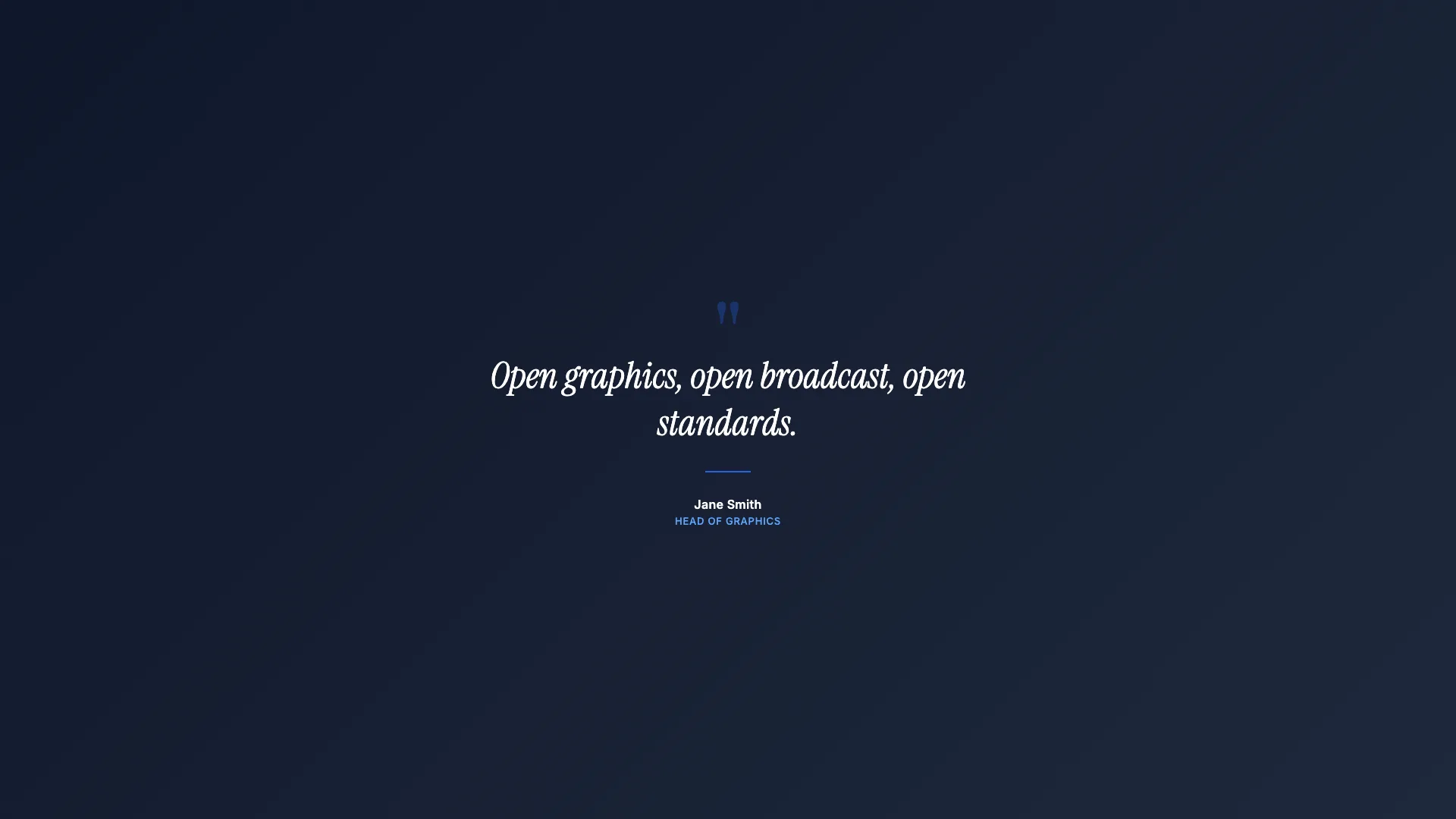
Intermediário15 min
Citação em tela cheia
Tipografia cinematográfica em tela cheia
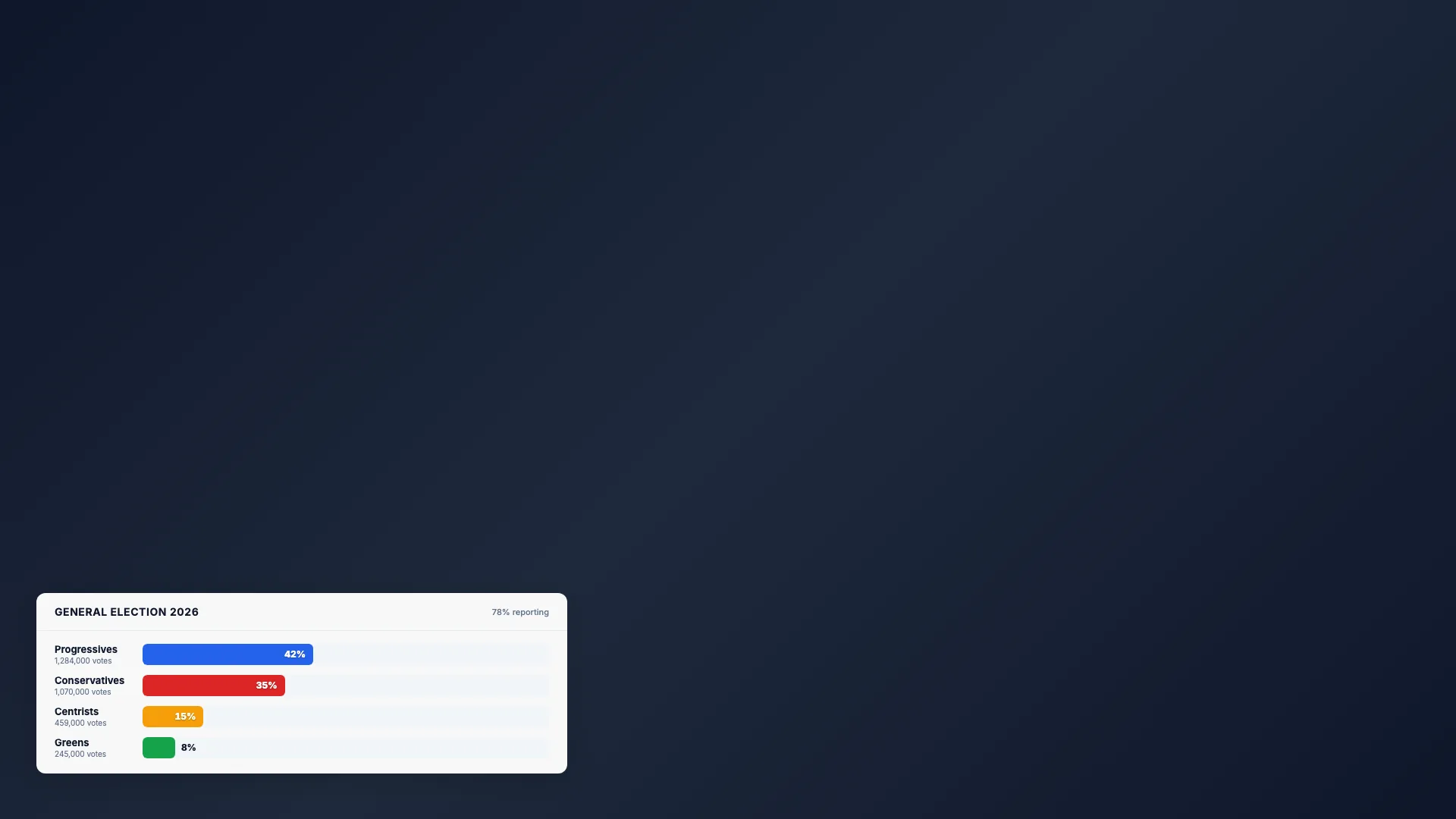
Intermediário20 min
Barras de eleição
Gráfico de porcentagens animado
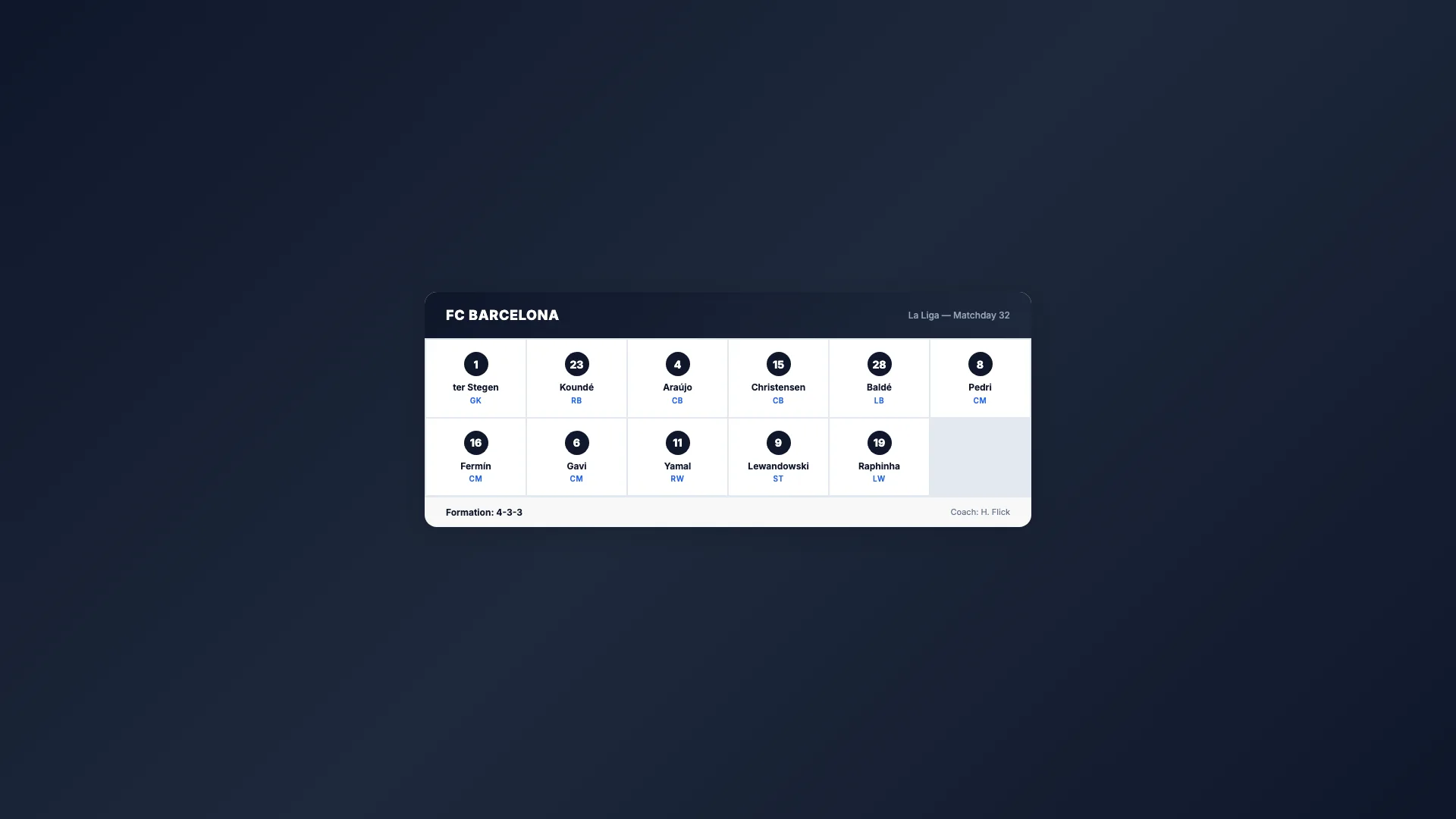
Intermediário20 min
Escalação esportiva
Grade com o elenco do time
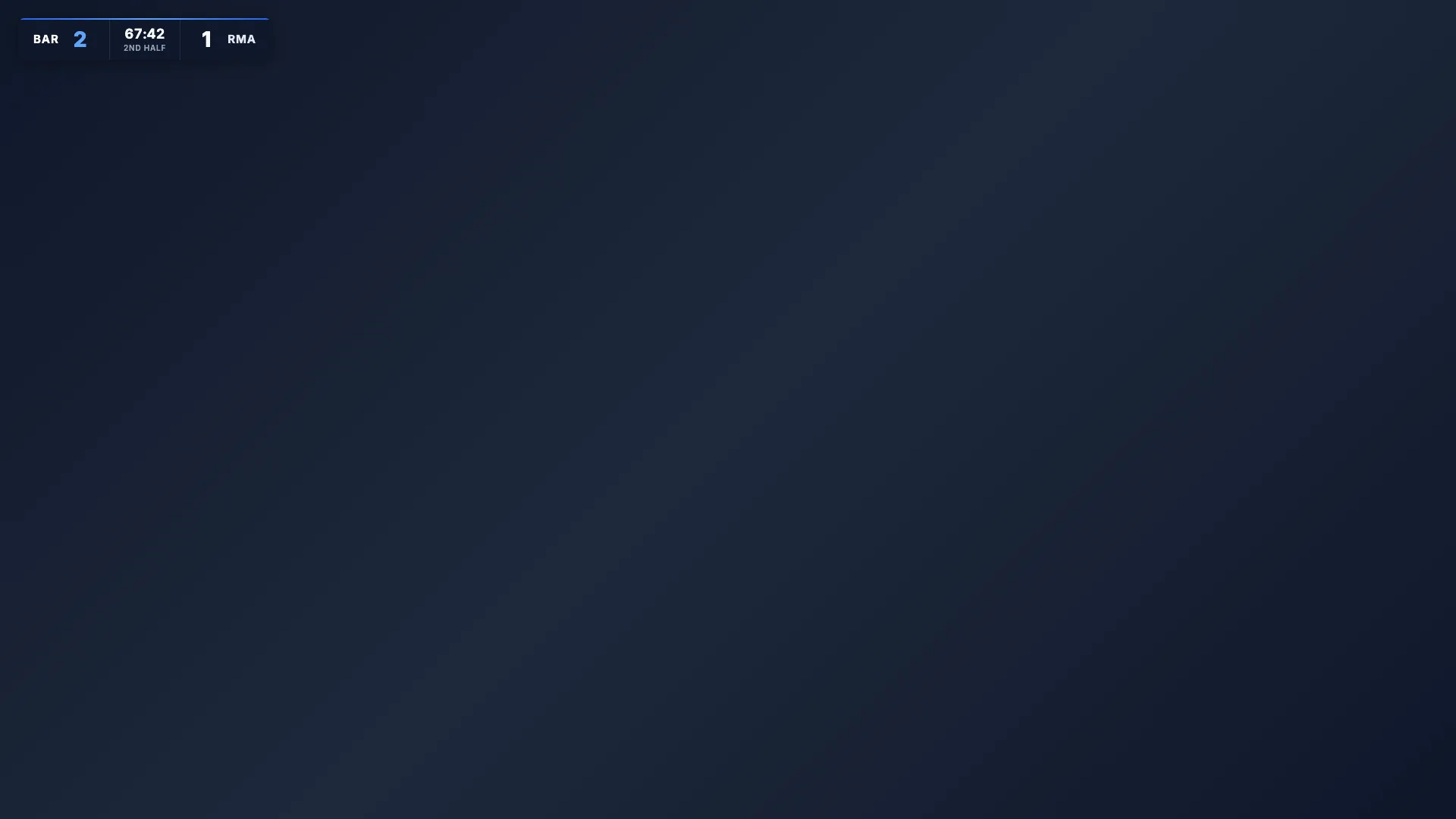
Avançado25 min
Placar
Placar de partida ao vivo
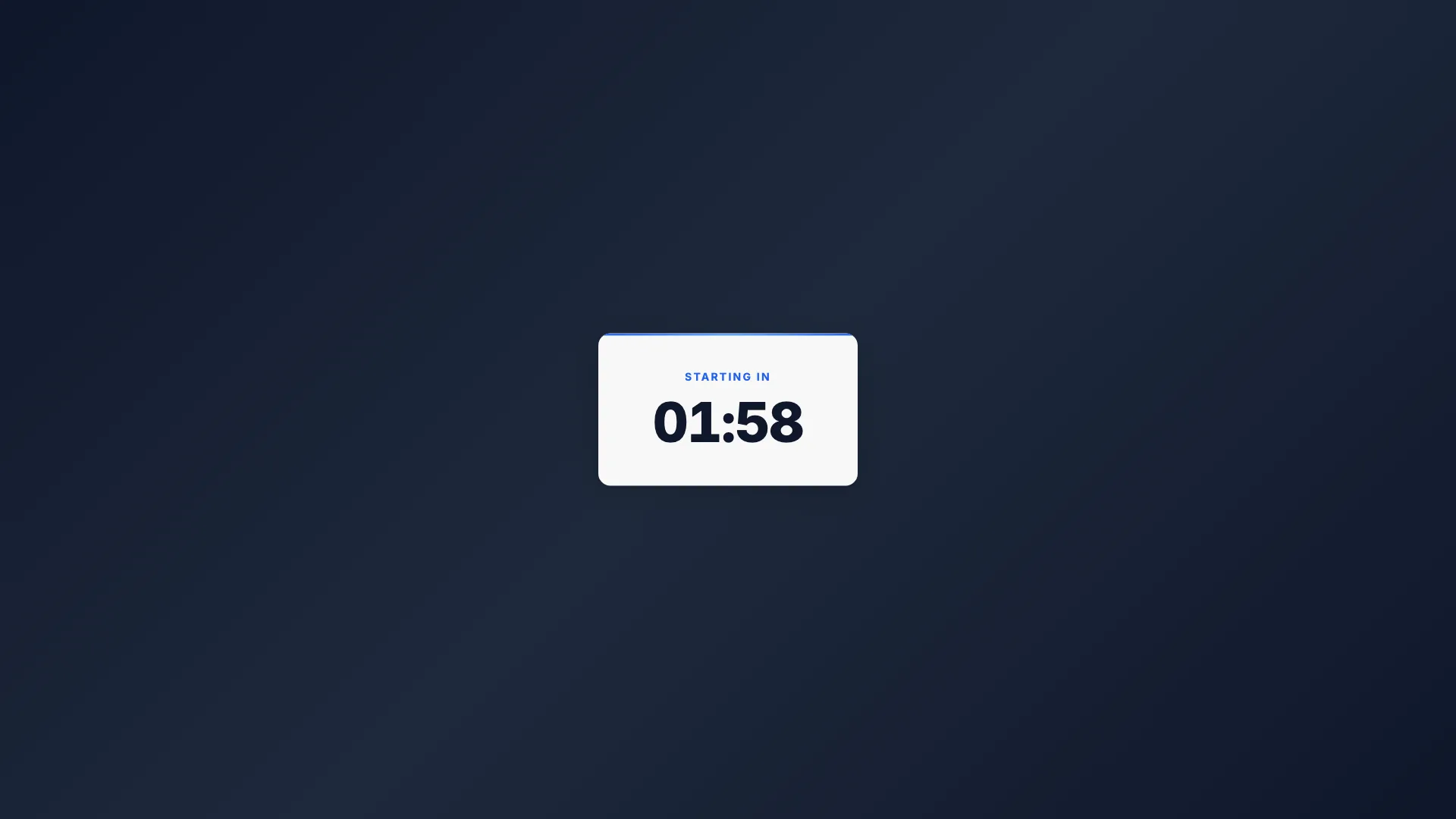
Intermediário15 min
Contagem regressiva
Relógio que avança sozinho
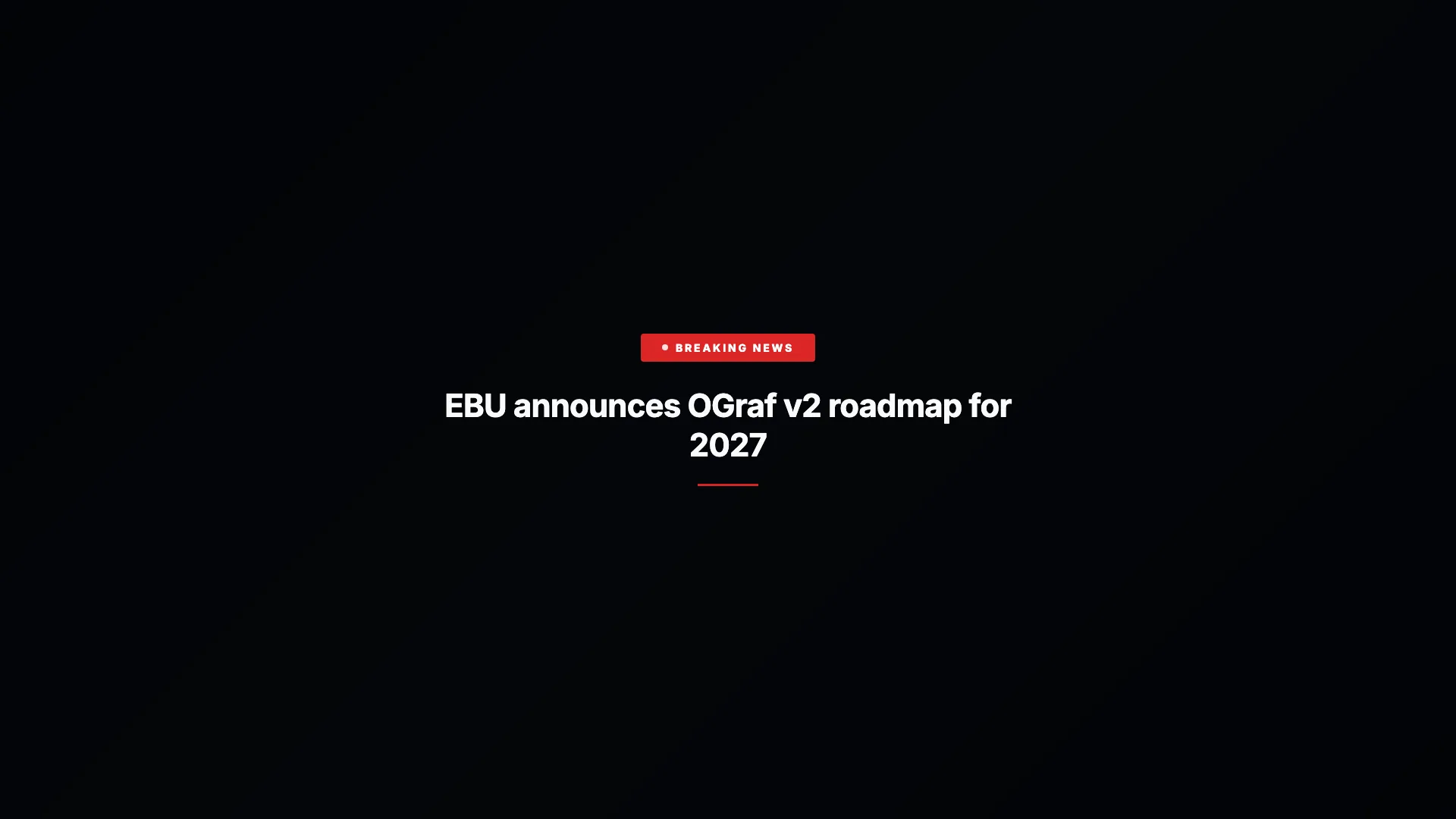
Intermediário15 min
Plantão
Alerta urgente em tela cheia
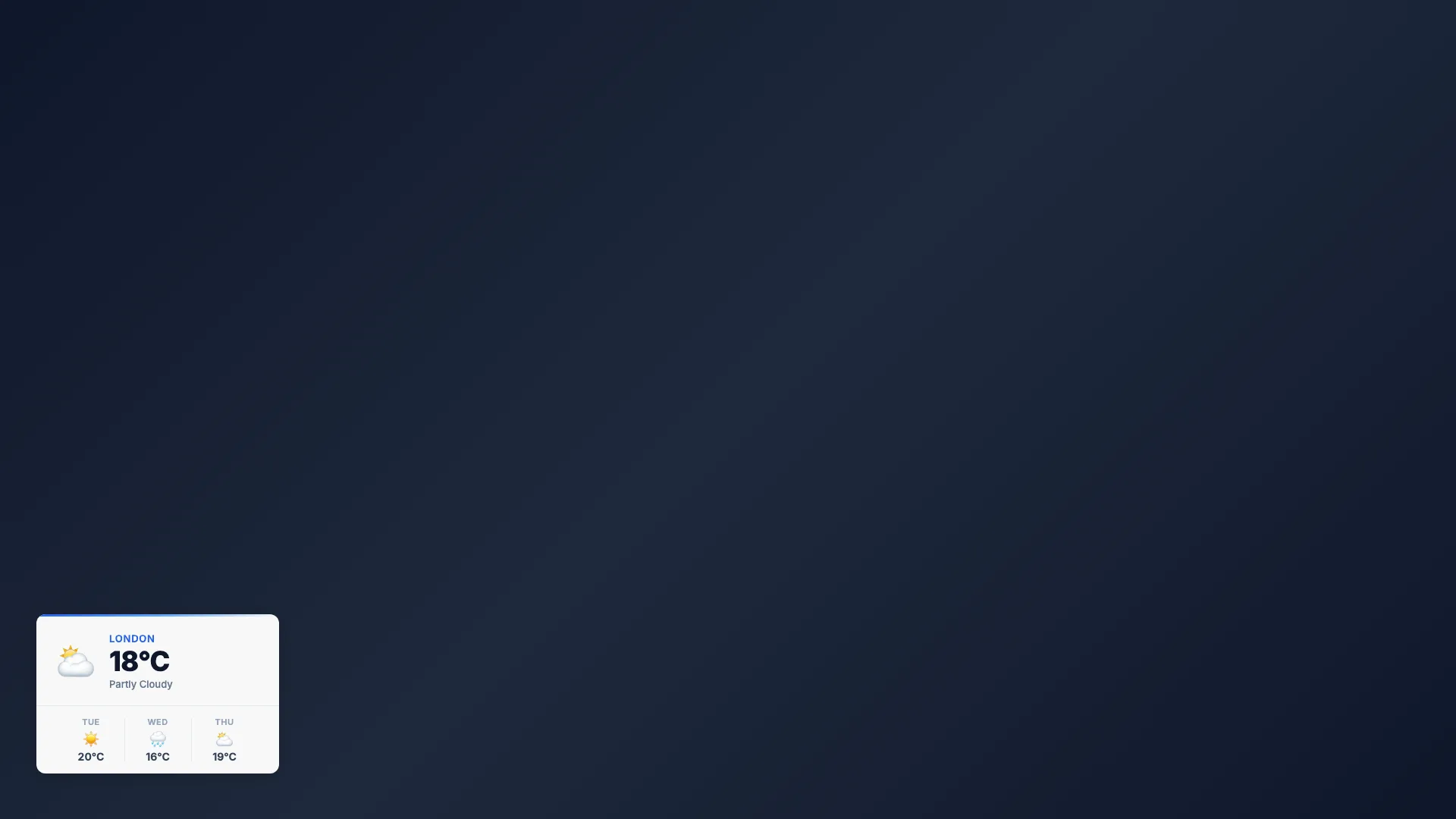
Intermediário20 min
Previsão do tempo
Condições atuais e previsão de 3 dias
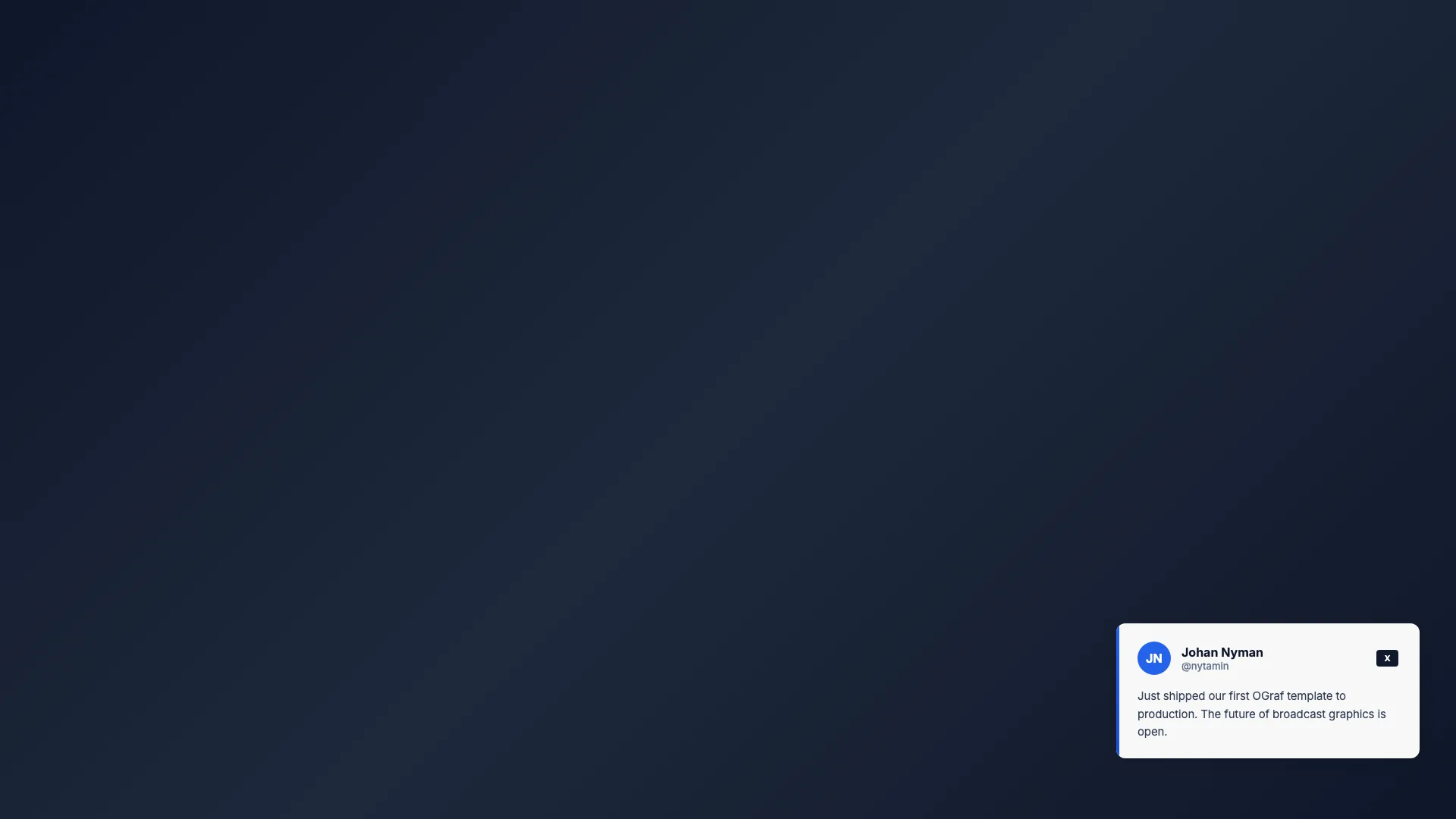
Iniciante10 min
Card de rede social
Post sobreposto com avatar